
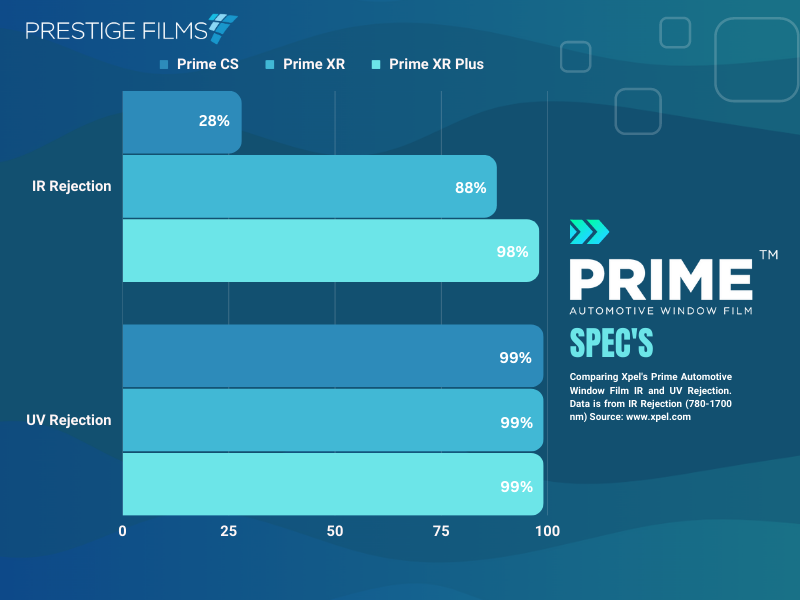

IR Rejection 28% | UV Rejection 99%

IR Rejection 88% | UV Rejection 99%

IR Rejection 98% | UV Rejection 99%
IR rejection refers to the ability of a window tint to block infrared radiation (IR) from entering through the window. IR radiation is a type of heat that is produced by the sun and can enter through windows, making a vehicle hotter and less comfortable.
Ceramic window tints are designed to reject IR radiation and are made with ceramic particles that can absorb and reflect this type of radiation. The higher the IR rejection percentage of a window tint, the more effective it is at blocking heat and keeping a room cooler.
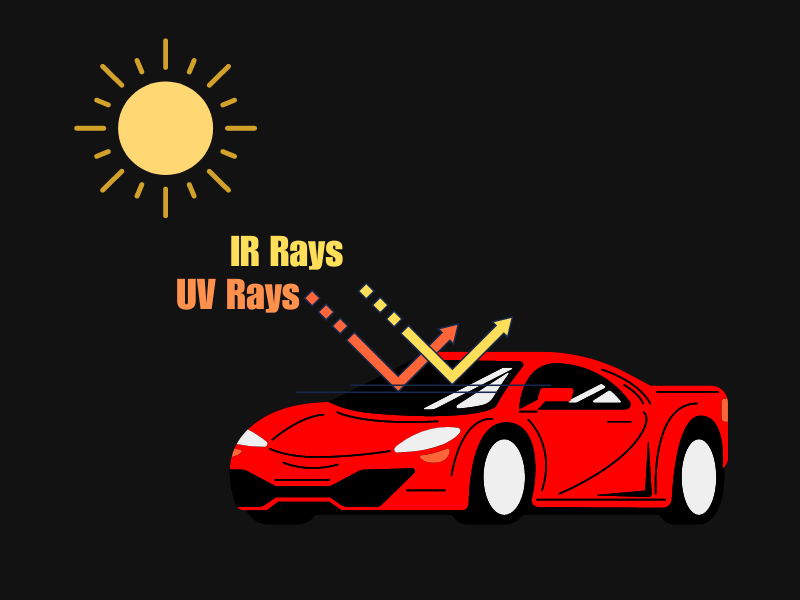
UV, or ultraviolet, rejection is also an important factor to consider when comparing automotive window tints. UV rays can cause damage to both the interior and exterior of a car, including fading, cracking, and discoloration of upholstery, dashboard, and other surfaces. UV rays are also very harmful to human skin and can increase the risk of skin cancer.
The UV rejection rating of a window tint refers to its ability to block UV rays and protect the car’s interior and occupants from their harmful effects. A higher UV rejection rating means that the tint is more effective at blocking UV rays and reducing the risk of damage to the car’s interior and occupants.
While the Xpel Prime Automotive window tint series offers varying levels of IR and UV rejection, it’s important to also consider their price points. The starting price for Prime CS is $200, making it a more affordable option for those on a tighter budget. On the other hand, Prime XR has a starting price of $300, which may be worth the extra investment for its higher level of IR rejection. And for those who prioritize maximum heat rejection and UV protection, Prime XR PLUS has a starting price of $450. Pricing is based on tinting a full car, sedan, or truck.
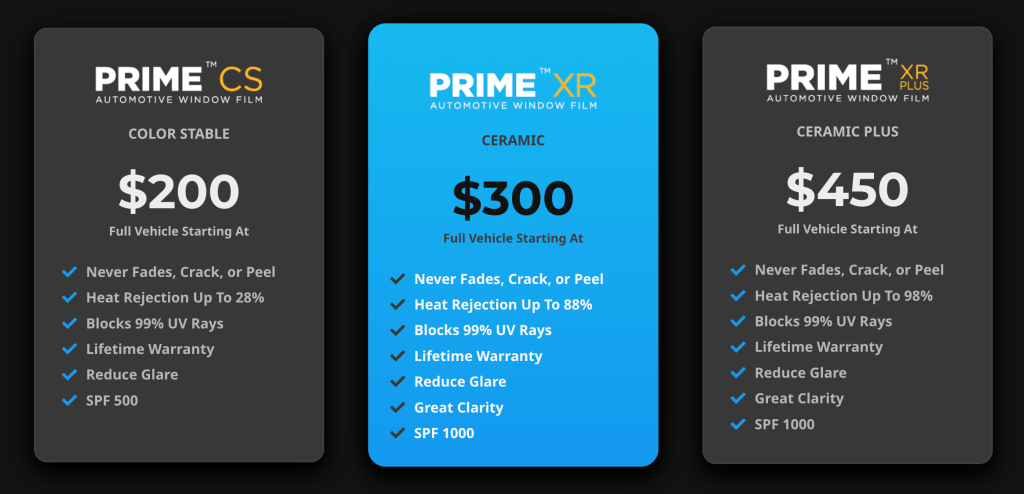
Xpel offers a range of products that are designed to provide effective IR and UV rejection, enhancing both the appearance and functionality of your vehicle. With varying levels of IR rejection, from 28% to 98%, and a consistent UV rejection of 99%, there is a window tint option available to meet your specific needs. By understanding the importance of IR and UV rejection in window tinting, you can make an informed decision and select the best option to protect your car’s interior, reduce heat, and increase your overall comfort while driving. Contact us for more information about our services or book an appointment online today!
Subscribe now to keep reading and get access to the full archive.